
Imagine navigating the intricate, centuries-old streets of a major world capital. You approach an intersection, your foot hovering over the brake, searching for that familiar red octagon that dictates the flow of traffic. In Paris, you would be looking forever. The city famously operates almost entirely without stop signs, a fact that sounds like a recipe for vehicular chaos to many of us raised on a diet of strict traffic controls. Yet, the city’s heart continues to beat, and its traffic, while notoriously spirited, manages to flow in a dance of steel and glass that defies expectations.
The secret to this seemingly impossible system is a simple but profound rule: “la priorité à droite,” or the priority to the right. On most Parisian streets, any vehicle entering an intersection from your right-hand side automatically has the right-of-way. This single principle fundamentally changes the psychology of driving. Instead of looking for a sign to tell them what to do, drivers are forced to be constantly aware, approaching every cross street with caution and the assumption that they may have to yield. It transforms driving from a passive act of following commands into an active, constant negotiation with every other driver on the road.
From my perspective, this reveals a fascinating cultural difference in the philosophy of public space. The American system, with its proliferation of stop signs, is built on explicit instruction and the mitigation of liability. It assumes a need for rigid control. The Parisian model, by contrast, is built on a foundation of shared responsibility and situational awareness. It places trust in the driver to be vigilant and courteous. It suggests that order can arise not just from top-down rules, but from a collective understanding and a shared incentive to avoid collisions. It’s less about preventing movement and more about managing its continuous, fluid nature.
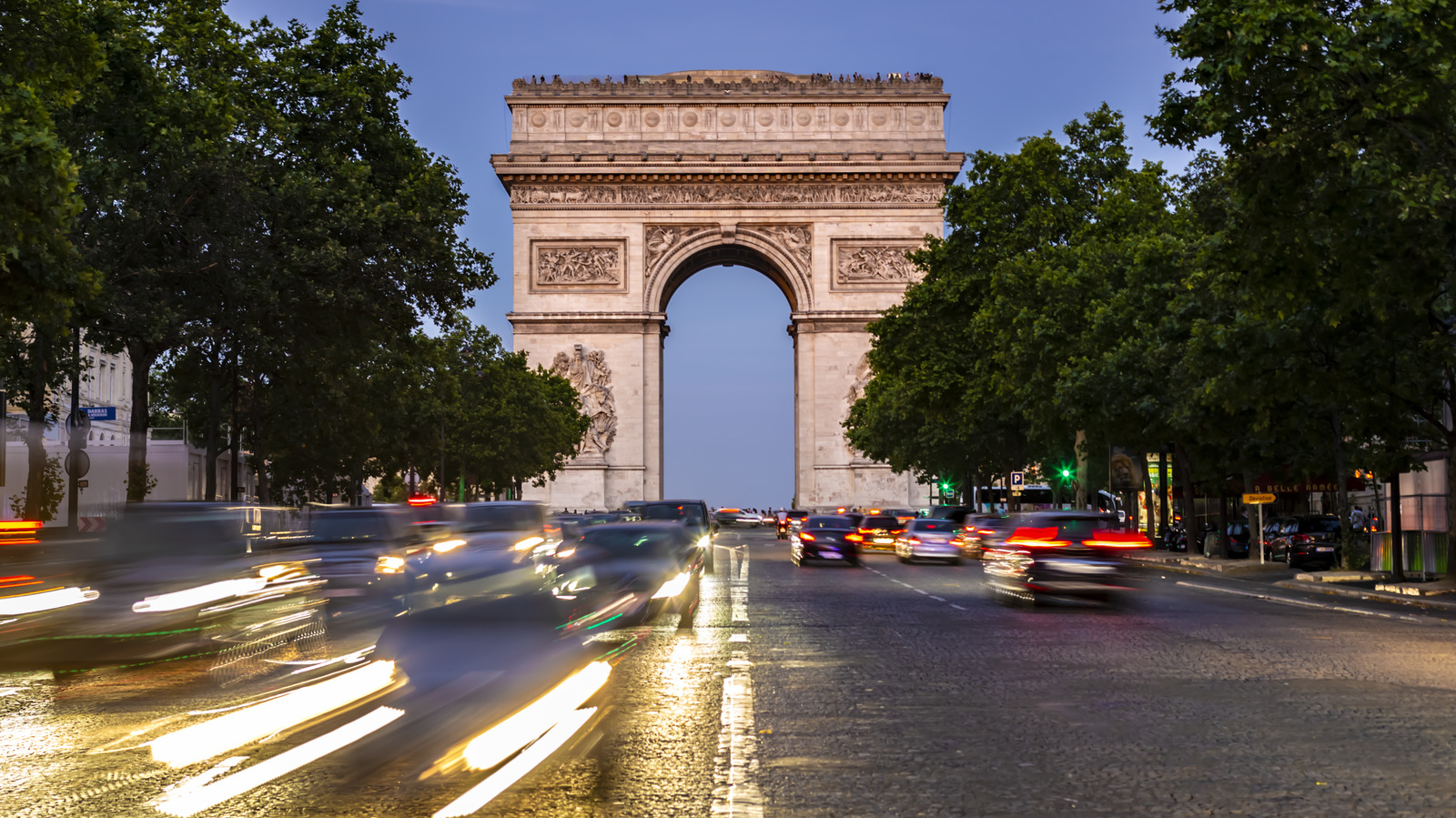
Of course, this is not an absolute, city-wide mandate without exceptions. You won’t see drivers blithely pulling out into the eight-lane controlled chaos of the Champs-Élysées. Major boulevards are governed by traffic lights, and some specific intersections are marked with the familiar triangular yield sign. Furthermore, on the city’s infamous roundabouts, like the one encircling the Arc de Triomphe, the rule is reversed—those already in the circle have priority. This adaptability shows the system isn’t a dogmatic ideology but a practical tool, applied where it works best: in the dense network of smaller streets that form the historic core of Paris.
Ultimately, the absence of stop signs in Paris is more than a quirky piece of trivia; it’s a lesson in urban design and human behavior. It demonstrates that the path to safety and efficiency isn’t always paved with more signs, signals, and regulations. By empowering drivers with a simple, universally understood principle, the city fosters a culture of attentiveness that a simple red sign cannot. It’s a compelling reminder that sometimes, the most effective system is one that relies not on stopping people, but on trusting them to navigate the way forward together.

Leave a Reply