
In an era where political discourse often feels like a battlefield, a new poll has revealed a troubling trend that goes beyond mere disagreement. It points to a growing numbness, a collective shrug in the face of threats that once would have sounded alarm bells across the nation. The findings suggest that younger Americans are demonstrating less anxiety about the risks of political violence and the erosion of free speech. This isn’t just about youthful optimism or detachment; it signals a potential seismic shift in how the foundational principles of a stable democracy are valued by the generations poised to inherit it.
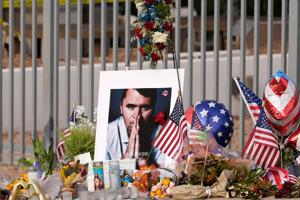
Perhaps the most startling revelation is the deep partisan chasm in our capacity for concern. According to the data, both Republicans and Democrats are acutely worried about violence and intimidation directed at their own political tribe. Yet, that concern largely vanishes when the targets are on the other side of the aisle. This is more than just political rivalry; it’s a symptom of a profound empathy gap. When we cease to see our political opponents as fellow citizens deserving of safety and instead view them as adversaries in a zero-sum game, the unwritten rules of civil society begin to dissolve. We are effectively saying that safety and freedom are conditional, reserved only for those who share our worldview.
What is driving this selective outrage and generational apathy? One could argue that younger Americans have been raised in a constant state of digital crisis, where hyperbolic language and threats are part of the daily online noise, leading to desensitization. For them, the alarm has been ringing for so long that it has become background music. This, combined with information silos that relentlessly paint the opposition as an existential threat, creates a toxic brew. It becomes psychologically easier to rationalize or ignore threats against a group you’ve been conditioned to believe is dangerous, misguided, or even evil.
This dangerous dynamic creates a feedback loop where political leaders and media outlets can leverage fear of the “other side” while downplaying dangers posed by their own. The poll’s findings are not just numbers on a page; they are a reflection of a culture that is forgetting a fundamental democratic truth: a threat to anyone’s rights is a threat to everyone’s rights. The principle of free expression is not meant to protect popular speech, but precisely the speech we despise. Likewise, the condemnation of political violence must be absolute, not dependent on the victim’s party affiliation.
Ultimately, this poll serves as a critical diagnostic of our civic health, and the prognosis is concerning. We are losing the shared values that act as the guardrails of our republic. The challenge ahead is not merely to convince people to be more civil, but to rebuild a foundational understanding that our opponents are not our enemies. Without a renewed commitment to the universal principles of non-violence and free expression—for all, not just for “us”—we risk shrugging our way into a future where the democracy we take for granted is no longer recognizable.

Leave a Reply