
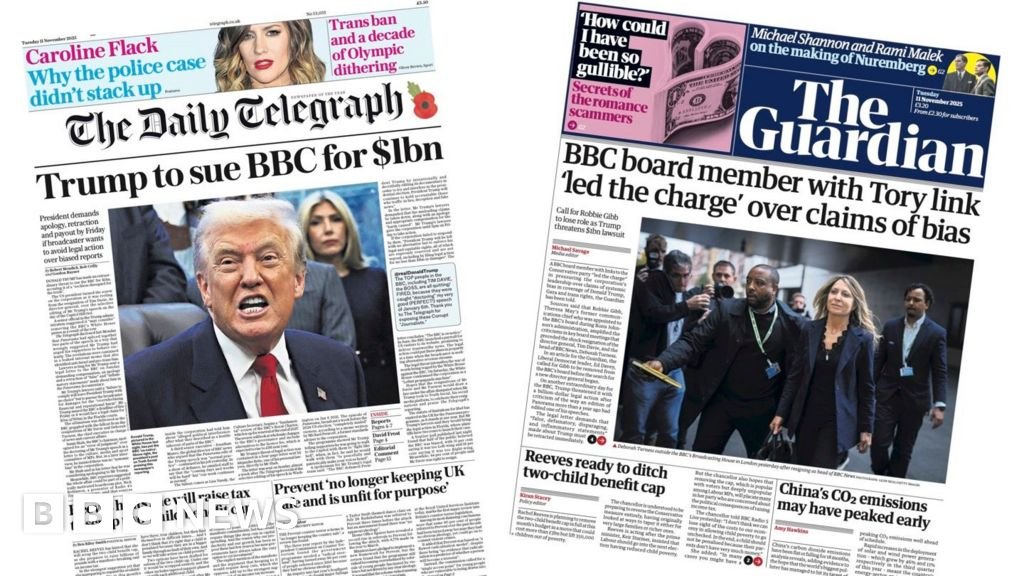
The news cycle is alight with a story that’s setting the media world abuzz: former US President Donald Trump is reportedly threatening the BBC with a monumental $1 billion lawsuit. This isn’t just a minor dispute; it’s a high-stakes legal challenge stemming from the editing of his speech within a documentary, a story that dominated Tuesday’s newspaper front pages and sparked widespread discussion across the globe.
At the heart of this brewing storm is the accusation that the BBC’s documentary misrepresented Mr. Trump’s words through its editing choices. While the specific details of the alleged misrepresentation are still emerging, the former president’s legal team is clearly signaling that they believe the public broadcaster crossed a line, potentially distorting his message and image. For figures like Trump, control over one’s public narrative is paramount, making any perceived editorial tampering a serious grievance in the political arena.
For the BBC, a venerable institution often seen as a standard-bearer for impartial journalism, this threat poses a significant challenge. It thrusts the broadcaster’s editorial processes under an intense spotlight, prompting questions about journalistic integrity, the boundaries of editing, and the potential chilling effect such lawsuits could have on investigative reporting. Public broadcasters globally often navigate complex political landscapes, and this situation highlights the constant pressure they face from powerful entities seeking to influence narratives.
This isn’t merely a transatlantic legal spat; it reflects a broader global discussion about media accountability and the definition of truth in an increasingly digital and polarized world. In an era where “fake news” allegations are common, and trust in traditional media is often scrutinized, high-profile cases like this serve as a stark reminder of the power of media narratives and the fervent battles fought over their interpretation. As this story unfolds, a potential billion-dollar lawsuit could be a protracted and costly affair, not just financially, but also for the reputations involved.
Ultimately, this developing story is a potent illustration of the ongoing tension between powerful political figures and the media institutions tasked with reporting on them. It challenges us to consider the fine line between editorial freedom and perceived misrepresentation, stressing the critical importance of transparent, ethical journalism in an age where every word and edit can ignite a billion-dollar firestorm and shape public discourse.

Leave a Reply