
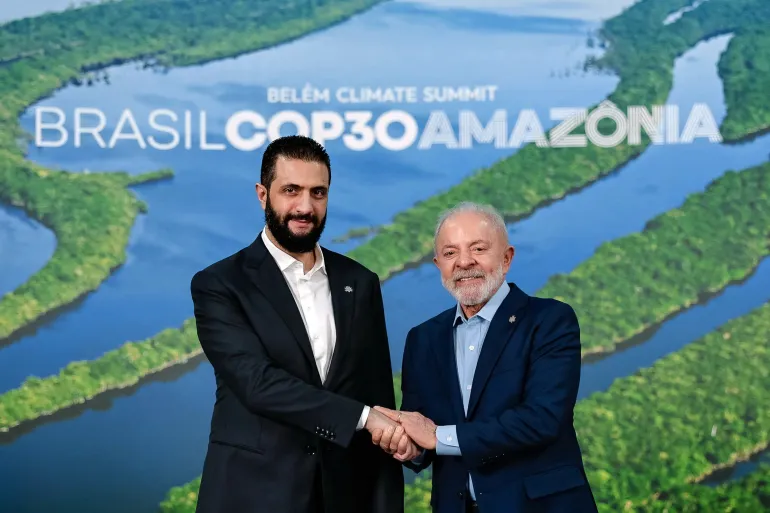
In a move that has captured global attention, Syria’s al-Sharaa recently made a significant appearance at COP30, the United Nations climate change conference. This participation isn’t just another item on the environmental agenda; it signals a potentially dramatic shift in Syria’s international standing and its approach to global challenges. Al-Sharaa’s commitment to climate goals on such a prominent stage suggests a new chapter in Syrian diplomacy, aiming to re-engage with the world on critical issues.
The setting for this pledge — an Amazon summit — adds another layer of symbolic importance. COP30, held in a region vital for global biodiversity and climate regulation, underscores the interconnectedness of environmental issues that transcend national borders. For Syria, a nation often associated with conflict and isolation, to actively participate and pledge commitment at such an event highlights a growing recognition of climate change as a universal threat, requiring collective action from all corners of the globe.
Al-Sharaa’s specific pledge to uphold climate goals reflects an apparent readiness to align Syria with international environmental efforts. While the details of these commitments remain to be fully elaborated, the very act of making such a declaration on a global platform is a powerful statement. It signals a potential desire to contribute to a sustainable future, moving beyond past geopolitical complexities to address an urgent common enemy: climate degradation.
This climate commitment is also intrinsically linked to a broader diplomatic recalibration. Notably, al-Sharaa’s appearance precedes highly anticipated talks with former President Trump in Washington, a meeting made possible only after the UN Security Council lifted long-standing sanctions. This sequence of events suggests a strategic effort by Syria to re-enter the international fold, using climate action as a potential bridge for diplomatic re-engagement and normalization of relations.
The convergence of climate pledges and high-stakes diplomatic talks opens a fascinating dialogue about Syria’s future trajectory. Could this mark the beginning of Syria’s reintegration into global governance and cooperation? The potential implications are vast, spanning not only environmental policy but also regional stability and international relations. Observers worldwide will be watching closely to see if this dual approach to climate and diplomacy paves the way for a more constructive and cooperative path forward.
In conclusion, Syria’s recent actions, from the climate pledge at COP30 to the impending talks in Washington, signify more than just environmental concern. They represent a complex weave of strategic diplomacy, a potential desire for international recognition, and a fascinating exploration of how environmental imperatives can intersect with geopolitical shifts to forge new pathways for nations on the global stage. It’s a reminder that even in the most challenging political landscapes, the universal threat of climate change can sometimes open unexpected doors to dialogue and potential change.

Leave a Reply