
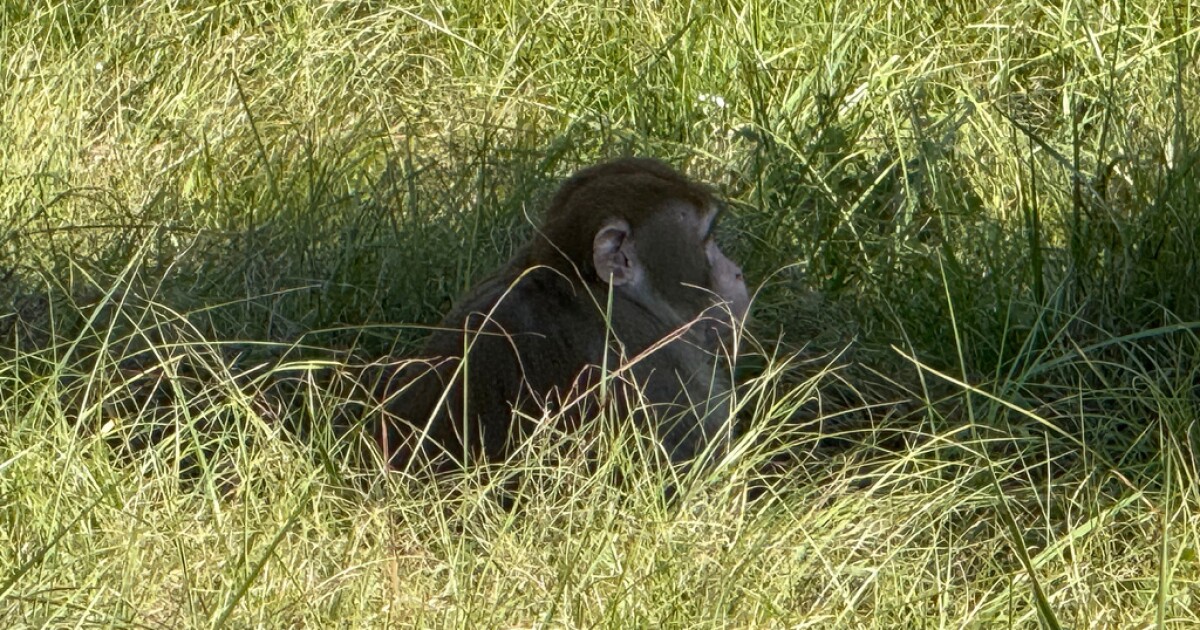
The ordinary hum of a Mississippi Sunday was shattered by an event that feels torn from a surrealist film script. Following a chaotic highway accident involving an overturned truck, a creature far from its native home found itself wandering a suburban landscape. For one local woman, the sight of this escaped primate in her yard triggered a primal fear. The situation escalated quickly, culminating in a gunshot that ended the monkey’s unexpected journey and ignited a complex conversation about instinct, safety, and the consequences of our industrialized world colliding with the animal kingdom.
From the perspective of the homeowner, the scenario was one of pure, unadulterated alarm. A wild, unpredictable animal was loose just feet from where her children might play. In that moment, the animal was not a displaced creature from a faraway land; it was a potential threat, an unknown variable in the carefully managed ecosystem of her family’s life. A parent’s instinct to protect their young is one of the most powerful forces in nature. Her decision, while tragic, was born from a place of perceived necessity, a calculated response to a situation for which no one could possibly be prepared. It highlights the profound anxiety that arises when the wilderness, in any form, breaches the walls of our domestic sanctuaries.
We must also consider the story from the monkey’s vantage point. Thrown from the familiar confines of a crate by a violent crash, it was likely terrified, disoriented, and possibly injured. Its actions were not driven by aggression, but by confusion and a desperate search for security in an alien environment. The trees, houses, and sounds of a Mississippi neighborhood were a frightening maze, a stark contrast to any world it had ever known. This creature was not an invader but a victim, first of a transportation mishap and then of a fatal misunderstanding between two species operating on entirely different wavelengths of fear and perception.
This single, tragic incident serves as a powerful metaphor for the broader, often fraught, relationship between humanity and the animals we transport across the globe for research, entertainment, or conservation. It exposes the inherent risks and ethical quandaries of moving living beings as cargo. When our systems fail—when a latch breaks or a truck overturns—the consequences ripple outward, impacting not just the animals themselves but also the unsuspecting communities they are suddenly thrust into. It forces us to ask difficult questions about our responsibilities and whether the benefits of such transportations outweigh the potential for disastrous and heartbreaking outcomes like this one.
In the end, there are no simple villains or heroes in this story. There is only a confluence of unfortunate events that led to a grim conclusion. A mother felt compelled to protect her family, and a displaced animal paid the ultimate price for a series of human errors. The event leaves us to ponder the deep chasm that exists between our world and the natural one. It’s a somber reminder that when those worlds violently intersect, the outcome is rarely clean or simple, often leaving behind a trail of regret and the lingering question of whether things could have, or should have, gone differently.

Leave a Reply